Why did I write this book?
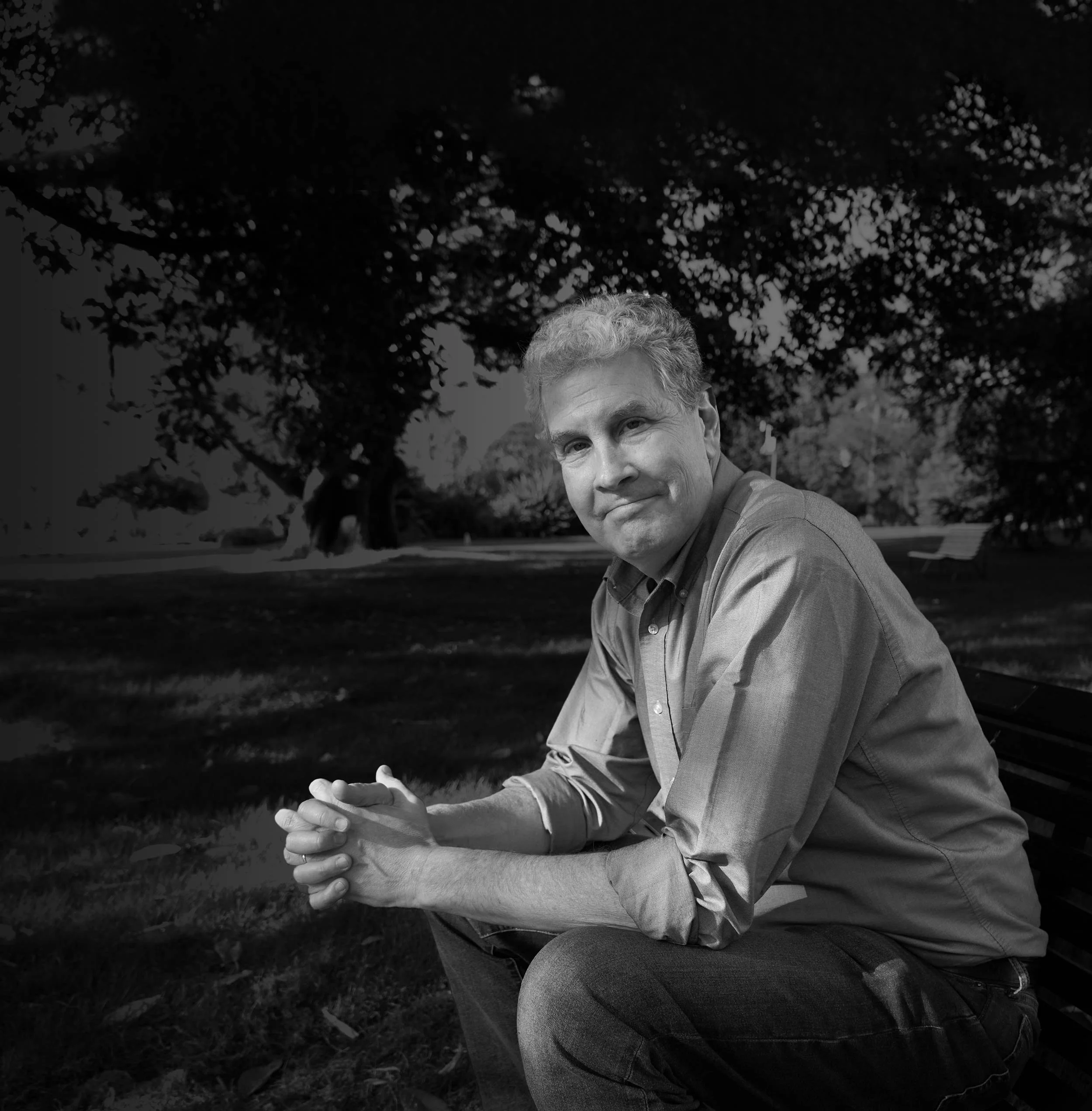
I actually had never intended to write this or any book. In many respects, writing the book was an accident. Three friends (all former colleagues) — Jared Waterman, Joe Nagy, and Peter Chantel — provided the spark.
It all started about two years ago while catching up with Jared via Zoom. I don’t specifically remember what we were discussing but it pertained to my journey as a CEO. I was in a philosophical mood that day, and shared some reflections about some of the key lessons that I’ve learned through the years. After politely listening to me pontificate for a while, Jared suggested that I should write a book. I didn’t initially take the suggestion seriously.
But about two hours later, while having lunch with Joe, I mentioned what Jared had said, and Joe enthusiastically agreed. Then, during a phone call with Peter the following week, he had an exuberantly positive reaction when I told him what both Jared and Joe had said. And at that moment I decided, somewhat spontaneously — why not? That set things in motion.
I quickly figured out my motivation. Although many books have been written about Silicon Valley, few of them focus on the real-life experience of running an early-stage, venture-funded technology company. And since I’ve run six of them, I have a unique perspective. Sharing that perspective seemed worthwhile.
Mike’s musings
-
I wasn’t sure how to write the book when I got started. The only thing I knew was that I wanted it to be original and unconventional. Otherwise, what would be the point in writing it?
I quickly concluded two things. First, I wanted to share lessons based on my personal experiences, but I had no interest in writing a traditional business memoir. Nor did I have any interest in writing a traditional “how to.”
So what to do? Then inspiration struck.
Between the ages of 26 and 50, I wrote an annual holiday letter that my wife and I would send to family and friends. That’s not unusual. But the approach to writing the letter was highly unusual. Instead of merely updating people on what our family had done the previous year, I treated each year’s letter as a creative writing exercise. My goal with each letter was to tell that year’s story in a distinct and surprising way. Sometimes that meant focusing on one person in the family, or one specific experience. Sometimes time wasn’t linear. Sometimes the language I used was symbolic or allegorical. Sometimes the point of the letter wasn’t revealed until the end. Etc.
Here’s the reason this backstory is relevant. After I decided to write this book, I spent several days staring at my laptop screen, unsure how to get started. And then it hit me. I may not have written a book before, in any conventional sense, but I have many years of experience writing holiday letters. So that, in effect, is what I would do.
Failure Is An Option is the result, a collection of 44 “holiday letters” — well…short stories. Each is autobiographical, concise, highlights a specific lesson or theme, and — with a couple of exceptions — stands on its own, complete and self-contained. In a sense, they can be read in any order, and purposely so.
-
I have three main goals in mind for people who read the book. First, I hope they find it thought-provoking and entertaining. Second, I hope it provides them with a better sense of what running an entrepreneurial technology company actually feels like. And, third, I hope they conclude that it’s unlike any business book they’ve ever read before.
-
There were several factors that played an important role. First, thanks to my Dad, I was exposed to technology and computers at a very young age. My father began his career as a high-energy physicist, before joining IBM’s Thomas J. Watson Research Center and transitioning to computer science. He then spent the next 25 years on the cutting edge, leading IBM’s research into AI and robotics, and contributing to a wide array of innovative activities.
Second, during my senior year in college, I decided to focus my thesis (I was an economics major) on the evolution of the computer industry. I wrote about the transition from mainframes (IBM) to minicomputers (Digital Equipment) to personal computers (Apple). One of the unexpected consequences of the thesis was that it helped me get hired, the following year, as a Business Analyst for McKinsey & Company in San Francisco. And a few months after starting the job, the client I was assigned to was Apple. I ended up working at the Apple campus in Cupertino for the next 8 months, and it was a terrific experience. I quickly resolved to pursue a career in Silicon Valley.
Having said that, I never aspired to be a CEO. I decided when I was 17 that I wanted to be a serial entrepreneur even though I barely understood the meaning of the term. But — naively — I only thought in terms of starting businesses. I never thought about actually running them.
But when you co-found a company, somebody needs to run it. And, as I describe in one of the chapters in the book, that — somewhat accidentally — became me.
Then, years later, having done it once, I had become qualified to do it again. And so I did. And then I did it again. And again. And so on.
-
There have been many moments that I hated. There have been many days that were stressful, gut-wrenching, and painful. But, overall, yes - I’ve enjoyed my career.
As I write in the book: “It hasn’t been easy, but it has always been interesting. It hasn’t always been fun, but it has always been challenging. And I’ve learned an enormous amount along the way — about entrepreneurship, leadership, and myself.”
And, as I also write in the book: “in the words of baseball immortal Yogi Berra: ‘If I had to do it all over again, I would do it all over again.’”
-
It depends. The answer depends on a person’s risk profile and emotional resiliency. A few people win the lottery, but for most Silicon Valley CEOs, the journey is profoundly difficult. And the biggest challenges aren’t strategic, tactical, or operational — they relate instead to mental health. As I write in the book: “It’s a psychological rollercoaster that goes down more than up — a metaphorical Omaha Beach on D-Day — a relentless exercise in self-delusion and masochism.”
The highs are incredibly high. The lows are unbelievably low. And things constantly and unpredictably oscillate between these two extremes. So it’s a wild ride and not for everyone.
But if you're passionate about innovation and can figure out how to maintain your emotional equilibrium, it’s a very interesting path, and, often, a hell of a lot of fun.
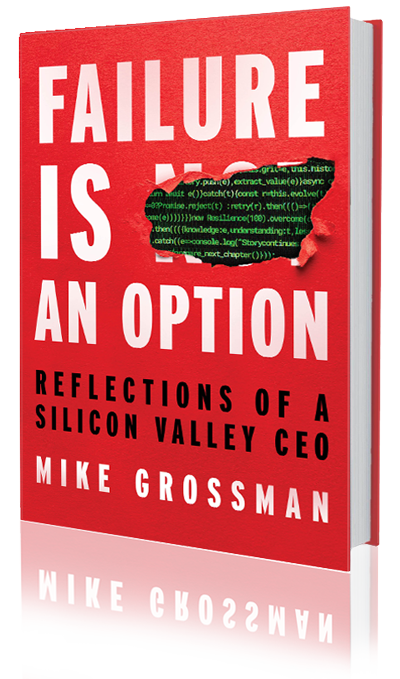
An unvarnished view of …
what running an entrepreneurial technology company actually feels like.
More buzz

Listen to talks
Upcoming live and online author talks, interviews, and speaking engagements about life as a six-time Silicon Valley CEO.
Latest press


Touch base
Bulk orders, educational use, interviews, and speaking engagements
Tag along